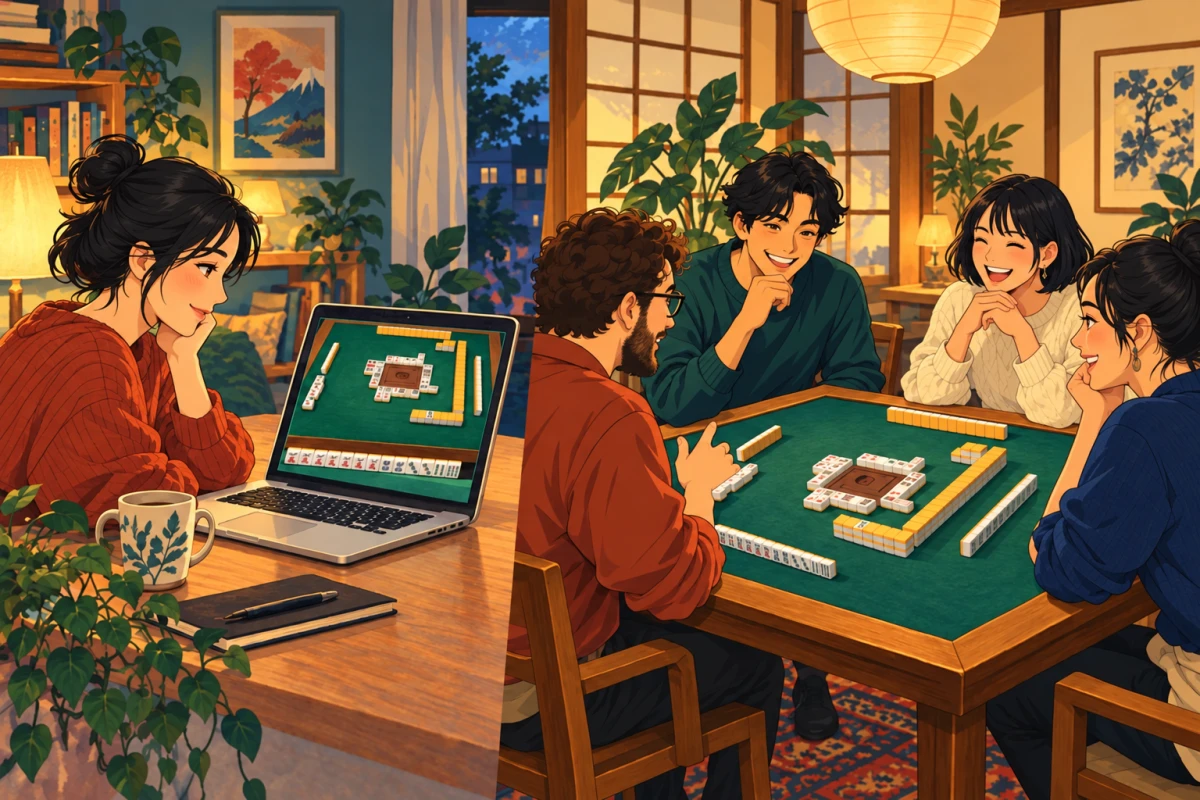

Give players one clear invitation, a comfortable venue and a predictable evening.
- You need
- Players and a clear plan
- Result
- A welcoming table
What kind of evening are we planning?
Decide whether this is a casual drop-in, a teaching night, or a tournament-style session. That choice sets the arrival window, table count, and how much explanation to prepare. For a first meetup, plan one short welcome and a flexible start instead of a tightly packed schedule.
Ask players to RSVP and mention whether they need a beginner-friendly table. If your club uses Riichi Dojo, publish the date as an event so members can find the details and organizers can record the games afterward. The event guide walks through setup.
What does the venue need?
Confirm the address, access hours, table dimensions, lighting, noise level, and whether food or drinks are allowed. Bring tile sets, score sticks, table mats, spare pens, and a simple rules reference. Send the location and arrival instructions in the same place as the RSVP link, and name a contact person for late arrivals.
For a recurring night, keep the format predictable: the same weekday, a clear start time, and a short break between hanchan. Tell players whether they should bring a set and whether the club can lend one.
How should we seat players?
Avoid putting every new player at one table without support. Pair newcomers with patient regulars, offer a quick rules refresher, and keep a teaching table open if attendance allows. Explain how to call, when to ask questions, and whether the table is playing casually or tracking results.
Use a rotation or a simple signup sheet so everyone knows where to sit. If players arrive late, have a plan for joining the next hand or next game rather than interrupting an active table.
What happens after play?
Thank the venue and players, share the next date, and ask what would make the next night easier. If you record results in the app, check that the correct event and ruleset were selected first. See recording a game and running a club.
A good game night feels organized without making people feel managed: communicate the essentials, leave room for conversation, and make the next invitation easy to accept.